Bedding · A practical guide
Down Fill Power Explained: Understanding Loft, Warmth, and Sleep Feel
A comforter’s fill-power number can sound like a complete verdict: higher must mean warmer, better, more luxurious. In reality, it tells only part of the story. Fill weight, construction, size, and the temperature of your bedroom all help determine how a down comforter feels once the lights are out.
Down has an unusual talent for seeming to occupy two contradictory states at once. It is airy and substantial, almost weightless in the hand, yet capable of making a cold bed feel like a small, well-insulated country. The source of this trick is the fine, three-dimensional cluster beneath a bird’s feathers. A cluster traps air; trapped air slows the movement of heat. The result is insulation without the dense, blanket-like heft of many other materials.
When people compare down comforters, the figure most often placed in the foreground is fill power. It is useful, but it is not a warmth rating, and it does not tell you precisely how much down is inside a particular comforter. Think of it as a description of the down’s lofting capacity: how much space a given weight of down can occupy under a standardized test. To understand the bed as a whole, you also need to know the amount of fill, how it is distributed, and what kind of warmth you want at night.
That distinction matters because the sleeping experience is not a laboratory measurement. Some people like a cover that barely registers; others want a soft, enveloping layer that stays put when they turn over. A cool bedroom, a warm sleeper, a thick duvet cover, and an overenthusiastic heating system can all change the meaning of the same product specification.
What fill power actually measures
Fill power measures the volume occupied by a set weight of down under specified testing conditions. In the United States, it is generally expressed in cubic inches per ounce. A higher number indicates down that expands into more volume for its weight. Because loft helps hold still air, higher-fill-power down can provide substantial insulation while remaining relatively light.
That last phrase is important: for its weight. Fill power does not say how many ounces of down a comforter contains. Nor does it directly announce how warm the finished comforter will be. A high-fill-power comforter with a modest amount of down may feel airy and light. A lower-fill-power comforter containing considerably more down can feel fuller, heavier, or warmer. They are different combinations of the same variables, not simply first and second place on a scale.
There is also a difference between loft as a specification and loft as a sensation. A comforter may rise into a handsome dome on a bed yet still feel light when pulled over the body. Another may lie closer to the mattress, with more noticeable weight and less visible puff. Neither form is automatically superior. The preferred feeling depends on whether you want buoyancy, drape, a cocooning quality, or a nearly imperceptible cover.
Fill-power figures are most useful when comparing similar products made for similar purposes. If two comforters have comparable dimensions, fill amounts, construction, and intended season, fill power can help distinguish the character of their down. If one is a summer-weight insert and the other a winter-weight comforter, the number alone is not an honest comparison. It is like comparing two coats by the softness of their wool while ignoring whether one is lined.
Fill weight: how much down is in the comforter?
Fill weight is the actual weight of the down used in a comforter, typically given in ounces or grams. It is a separate measurement from fill power, and the two work together. Fill power describes how efficiently the down lofts; fill weight tells you how much of that insulation has been put into the product.
Imagine two comforters of the same size. One contains down that expands dramatically but is used sparingly. The other contains down with less loft per ounce, but more of it. Depending on construction and the specific materials, either could provide greater warmth, more body, or a different balance of the two. A label that provides both figures gives a more useful picture than one that offers fill power alone.
Comforter dimensions complicate the comparison. A king-size version generally covers more area than a twin, and the same total amount of down spread across those surfaces would not create the same fill density. If the manufacturer lists fill weight by size, compare the size you actually intend to buy. When figures are unavailable, look for the stated warmth category, construction details, and recommendations for climate or season rather than attempting to infer performance from one number.
Weight also contributes to tactile preference. More fill can create a fuller, more substantial comforter, although the feel depends on the shell and the way the filling is held in place. Some sleepers find that gentle weight reassuring; others feel crowded by it. A person who describes a comforter as “too hot” may actually be reacting to warmth, weight, restricted airflow, or some combination of these. The distinction is useful when shopping: a lighter fill may reduce warmth, while a different construction or fabric may change the drape and breathability.
Sewn-through and baffle-box construction
Down moves. Left entirely loose inside a large fabric shell, it could collect in corners and migrate away from the places where insulation is needed. Comforters therefore use internal construction to divide or secure the fill. Two common approaches—sewn-through and baffle-box designs—create different patterns and have different practical effects.
Sewn-through construction
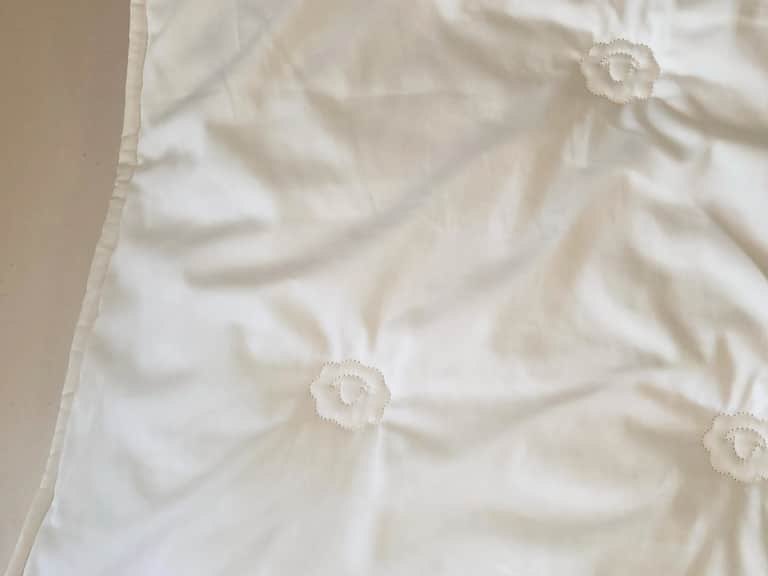
In a sewn-through comforter, the top and bottom fabrics are stitched directly together at intervals. The stitching creates separate compartments and helps keep the down from shifting. It also makes a relatively flat profile, with a tidy, tailored appearance. The trade-off is that each stitched line joins the outer layers, leaving less insulation at those points than in the filled sections.
That does not make sewn-through construction a flaw. In a lightweight comforter, the reduced loft at the seams can be part of a useful design: a lower, less lofty layer may suit warm rooms or people who prefer a neat, close-to-the-bed look. Sewn-through designs also tend to offer a more straightforward, even silhouette. For example, the Avalon 600-fill-power duvet insert uses sewn-through box construction and is offered in several warmth options, illustrating how a construction style can be paired with different levels of fill.
Baffle-box construction
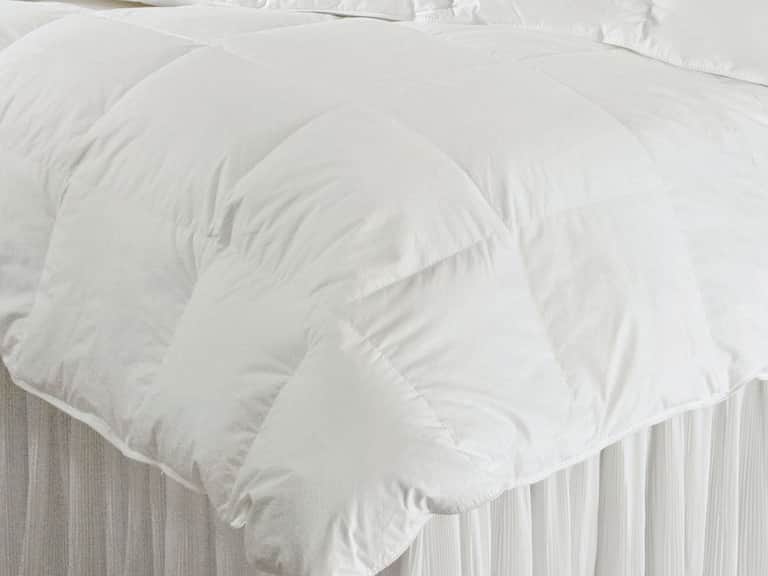
A baffle-box comforter uses narrow strips of fabric between its top and bottom layers to create three-dimensional compartments. Rather than being pressed flat at every dividing line, the chambers can rise and hold more loft. The partitions help limit the movement of down while allowing it to expand within each box.
That extra height can support a fuller, more even layer of insulation, and it helps reduce the appearance of cold channels along the seams. A baffle-box design is common in comforters intended to retain generous loft, though the phrase itself does not guarantee a particular degree of warmth. Box dimensions, down quality, fill amount, and overall size remain part of the calculation. A beautifully constructed chamber with little fill will not magically become a winter comforter.
Construction can affect how the comforter behaves as well as how it looks. A very lofty insert may take up more room inside a duvet cover and may feel more buoyant over the body. A flatter sewn-through design can be easier to layer beneath another blanket. If you use a duvet cover, corner ties or loops are worth checking: they help keep the insert aligned instead of allowing it to slide into an untidy heap at the foot of the bed.
Summer, year-round, and winter weights
Warmth labels are shorthand, not universal standards. One maker’s “year-round” comforter may feel different from another’s because the products can contain different amounts of down, use different fill powers, or be made in different sizes and constructions. Still, seasonal categories offer a helpful starting point when considered alongside your room and sleeping habits.
- Summer weight: Usually designed to provide a light layer with less insulation. It may suit warm climates, heated bedrooms, or people who sleep hot and still enjoy having a cover.
- Year-round weight: Intended as a middle ground for homes with moderate temperatures or for sleepers who want a single comforter through much of the year. It may still feel too warm in a hot bedroom or too light in a cold one.
- Winter weight: Generally offers more insulation for colder rooms, cold sleepers, or people who prefer a fuller, warmer bed. In a well-heated bedroom, it can be more than necessary.
The season printed on a product description cannot account for every home. A summer-weight comforter in a poorly insulated house may be comfortable in August and insufficient in May. A winter-weight option can feel just right for someone who sleeps cold in a cool room, but overpowering for a warm sleeper beneath a heavy duvet cover.
Some comforters are available in several weights while keeping much of the design the same. That makes warmth selection more direct: you can focus on the insulation level rather than treating a single fill-power figure as a prediction of how hot you will feel. The Villa Goose Down Comforter, for instance, is described as a year-round option with 600 fill power, a cotton cover, and box construction. Its listed specifications show why it is worth reading the whole description: fill power sits alongside the cover, construction, and intended use.
When a brand provides summer, year-round, and winter versions, check whether the options differ by fill weight, construction, or both. If you are deciding between two warmth levels, consider how often you can adjust the room temperature, whether you layer blankets, and whether your discomfort usually comes from overheating or from cold feet. A separate throw at the end of the bed can be easier to manage than buying a very warm comforter for occasional chilly nights.
The shell, the cover, and the rest of the bed
Down does not operate alone. The fabric that contains it can influence how the comforter feels against the skin, how air moves through the bed, and how well the fill stays inside. Cotton is common, but thread count by itself is not a dependable measure of comfort. Weave, fiber quality, finish, and the fabric’s down-proof construction also matter.
A duvet cover adds another layer between the sleeper and the comforter. A crisp, substantial cover may make a light insert feel more structured; a softer, lighter one may preserve more of its airy character. Sheets, mattress protectors, pajamas, and the mattress itself contribute to the microclimate around the body. If a new comforter seems too warm, the source may not be the fill power. A synthetic mattress protector or dense cover can change the feel of an otherwise breathable arrangement.
There is also the matter of room temperature. A bedroom kept consistently cool asks more of the comforter than a warm, insulated room. Humidity, ventilation, and the number of people sharing the bed can alter the experience. The small geography of sleep—one person under the covers, another with a foot out—does not always submit to a single specification.
A sensible way to compare comforters
Rather than beginning and ending with the largest number on the label, use a short sequence of questions. It turns a dense product description into something closer to a forecast.
- What is your bedroom like at night? Consider the usual temperature, not just the coldest or hottest night of the year.
- Do you tend to sleep warm or cold? If you frequently uncover yourself, prioritize a lighter warmth category and breathable layers.
- What kind of weight do you enjoy? Decide whether you prefer an airy layer or a comforter with a more substantial drape.
- What are the fill power and fill weight? Read them together when both are available. Neither number alone describes the complete warmth profile.
- How is the fill secured? Sewn-through and baffle-box construction create different profiles and ways of managing loft.
- Will you use a duvet cover? Check for corner ties or loops and consider how the cover’s fabric may change the final feel.
- What care does it require? Down comforters may need special washing and thorough drying. Follow the maker’s instructions rather than assuming they can be treated like ordinary laundry.
Keep the comparisons like for like wherever possible. Look at the same size, the same warmth category, and, ideally, similar construction. If one listing provides fill power but not fill weight, and another provides neither, be cautious about drawing precise conclusions from the numbers you do have. A clear explanation of intended season and construction can be more informative than a lone high figure.
Common misunderstandings about fill power
“Higher fill power always means warmer.” Not necessarily. Higher fill power means the down lofts more per unit of weight. Warmth depends on how much down is used, how the comforter is built, and the surrounding conditions.
“A higher number means a heavier comforter.” It does not. In fact, high-fill-power down can achieve a particular level of loft with less weight. Whether the finished comforter feels heavy depends on fill amount, shell, construction, and size.
“A lofty comforter is automatically too hot.” Loft can contribute to insulation, but a comforter’s warmth is not determined by appearance alone. A lofty summer option may still be designed for light insulation. The season category and fill weight help give the loft context.
“One warmth label works for everyone.” Seasonal labels are broad guidance. Sleep temperature, climate, room heating, bedding layers, and individual preference vary too much for a single label to make a universal promise.
“Thread count tells me how breathable the comforter is.” Thread count is only one piece of information about a shell. Fiber and weave matter too, and the complete bed includes the duvet cover and other layers.
The right number is the one that answers the right question
Fill power is a useful way to understand down’s capacity to loft. It helps explain why one comforter can look full without feeling heavy, and why a well-made down layer can provide warmth with a light touch. But it is not a score for overall quality, a direct measurement of heat, or a substitute for knowing the fill weight.
For a practical choice, set the number beside the other details: comforter size, fill amount, sewn-through or baffle-box construction, seasonal weight, shell fabric, and care. Then place those details in the context of your bedroom and your own habits. A high-loft winter comforter may be a pleasure in a cold room and a burden in a warm one. A modest, light layer may be exactly right for someone who wants the comfort of a cover without waking under a small weather system.
The best comforter is not necessarily the one with the grandest specifications. It is the one whose insulation, weight, and construction suit the ordinary conditions of your nights—the room after the heating clicks off, the blanket you pull up at three in the morning, the temperature at which you can stop negotiating with the covers and simply sleep.