Bedding · Materials · Sleep comfort
Why Wool Bedding Adapts to Seasonal Temperature Swings
A comforter can be warm without feeling sealed, and breathable without leaving a sleeper cold. Wool’s appeal lies in this delicate middle ground: it insulates, takes up moisture, and can feel comfortable across a wider range of conditions than its reputation for winter warmth might suggest. But no fiber works by magic. Fill weight, shell fabric, construction, and the room itself all help determine how wool bedding feels from one season to the next.
The appeal of a less temperamental bed
Bedrooms rarely hold a perfectly steady temperature through the night. The heating clicks on, the window cools, a partner pulls up the covers, and the sleeper who was comfortable at midnight wakes warm at four. Even in a well-insulated home, the conditions around a bed change with the weather and with the body. Bedding is part of that small, shifting climate.
Wool is often discussed as a winter material, a shorthand for warmth and heft. That description is incomplete. Wool fibers can trap still air, slowing the loss of body heat, while also taking up moisture vapor from the surrounding environment. The result can be a bed that feels warm without being as clammy as an overly insulating layer might. This is one reason wool comforters appeal to sleepers who want warmth but dislike the feeling of being wrapped in a dense, hot blanket.
“Temperature regulation” does not mean that wool actively cools a person, nor that it holds the bed at one exact temperature. A comforter is not a thermostat. Rather, its fibers and structure influence how heat and moisture move near the body. Whether that influence feels helpful depends on the sleeper, the room, and the bedding combination.
That distinction matters. A naturally breathable fill can still feel too warm if it is heavy, paired with a dense shell, or used in a heated bedroom. A lightweight comforter can still feel cozy when the room cools, particularly when layered with suitable sheets or a cover. Understanding the whole arrangement is more useful than relying on a material label alone.
What wool does with warmth and moisture
Wool fibers have a naturally crimped structure. In a comforter, the fibers form a layer that holds pockets of air; those pockets help slow heat moving away from the sleeper. The same basic principle appears in many insulating materials: still air is a poor conductor of heat, so a stable layer of it can help retain warmth.
Wool is also hygroscopic, meaning the fiber can absorb water vapor. In bedding, that property may help moderate the sensation of dampness as a sleeper releases moisture during the night. The fiber’s ability to take up moisture does not mean a comforter will remove every source of overheating, and it does not replace ventilation or breathable sleepwear. It is one part of a larger exchange between body, bedding, and room.
These qualities can be especially relevant to people who experience changing comfort over the course of a night. Someone may begin cold, then become warm under a thick cover; another person may be comfortable in a cool room but dislike a synthetic layer that feels stuffy. Wool’s combination of insulation and moisture management can make it an appealing option for those seeking a steadier, drier feel.
There are limits. A comforter cannot correct a room that is consistently too hot, a mattress that retains substantial heat, or a sleep routine that leaves someone overheated. Nor is “breathable” a guarantee of coolness. It describes a quality of the material and construction, not a promise that every sleeper will experience the same result.
Fill weight: the detail behind the label
When comparing wool comforters, fill weight is among the most useful specifications to examine. It is commonly given as the weight of filling in the whole comforter, or as a measure per area, such as grams per square meter. The second kind of figure can help comparison across sizes, though product descriptions do not always present information in the same way. If a specification is unclear, it is worth checking with the maker before treating two numbers as equivalent.
In general, a lighter fill provides less insulation and is often a better starting point for warm climates, heated bedrooms, or people who tend to sleep hot. A heavier fill usually offers more warmth for cold rooms or sleepers who feel chilled at night. “Lightweight” and “medium-weight” are useful clues, but they are not universal standards. One brand’s medium may not feel like another’s, and shell fabric and quilting alter the experience.
A light wool comforter can work as a year-round layer in a home with a fairly stable indoor temperature. It can also be a practical choice for a sleeper who prefers to add a blanket when needed rather than begin with a substantial layer. In a cool bedroom, a medium or heavier version may offer more dependable warmth, especially for someone who sleeps cold or likes a cocooning feel.
Season is only a rough guide. A summer-weight comforter may suit a cold sleeper in an air-conditioned room, while a heavier one may feel oppressive to a warm sleeper even in autumn. A better question is not simply “What season is this for?” but “What is my room like overnight, and how much warmth do I want directly over me?”
Sleepers who share a bed can add another complication: one person may want a generous layer while the other wants almost none. Separate lightweight and heavier blankets can sometimes solve this more elegantly than asking a single comforter to satisfy two different thermometers.
Construction shapes the feel
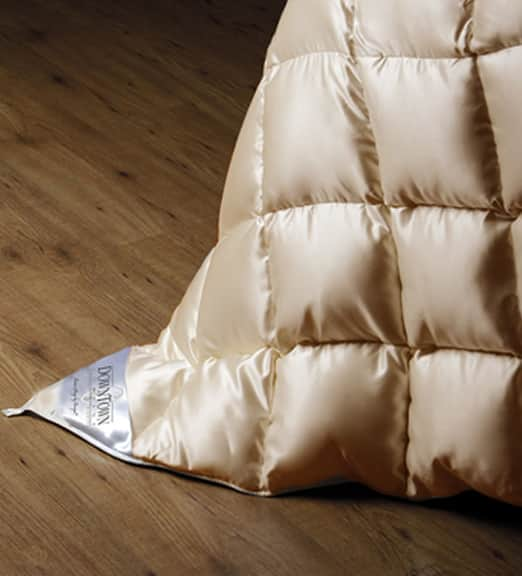
Wool fill does not float freely inside a comforter. Quilting, stitching, and compartment design determine how it is held in place, how evenly it spreads, and how the finished bedding drapes. Well-secured fill is less likely to migrate into a corner or leave thin areas that feel noticeably cooler. The construction also affects how the comforter rests on the body: a flatter quilted design may feel more even, while a more substantial loft can feel warmer and more enveloping.
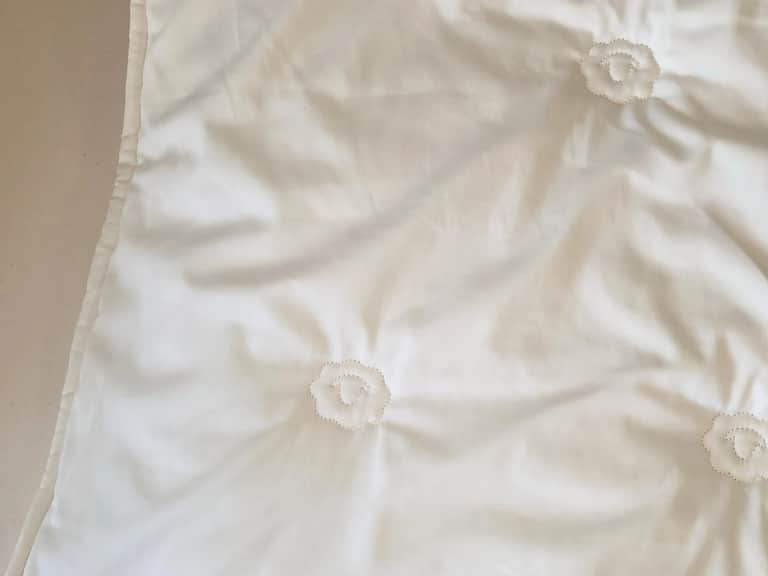
Many wool comforters use quilting or tufting to keep the batting distributed. The exact method varies, as do the size and spacing of the stitched areas. These details are not merely decorative. A comforter that stays evenly filled can provide more consistent coverage over time. When reading specifications, look for a clear description of how the fill is secured and whether the maker recommends any particular way to use or store the comforter.
The shell deserves similar attention. Cotton is common because it can offer a familiar, breathable surface, but the weave, finish, and weight matter. A smooth cotton sateen shell may feel softer and more substantial than a crisp, lighter percale. Neither is inherently the right choice; the useful question is whether the cover’s hand and airflow suit the person using it. A dense outer fabric can make even an airy fill feel less ventilated.
Also consider whether the comforter is designed to be used with a duvet cover. A cover protects the bedding from ordinary wear and makes routine laundering simpler, but it adds another textile layer. A thick or tightly woven cover can change the warmth and drape. If the goal is a lighter feel, a breathable, appropriately sized cover may matter as much as the fill itself.
Choose for the bedroom you have
Climate offers a starting point, not a verdict. A home in a warm region may still have cold bedrooms in winter; a northern home may be kept warm at night. Before choosing wool bedding, notice the conditions where you sleep rather than relying on the weather outside. How warm is the room just before bed? Does it cool significantly by morning? Is the heating left on overnight? Do windows or exterior walls make one side of the room colder?
For a warm bedroom, a lightweight wool comforter may provide enough coverage to feel settled without adding unnecessary insulation. If the room is cool but not cold, a middle-weight design may be more suitable. For a reliably chilly room, a heavier option, or a lighter comforter paired with an additional blanket, may offer better flexibility. Layering is useful because it allows warmth to be adjusted without replacing the entire bedding setup.
Personal sleep temperature deserves equal consideration. People vary in how they experience warmth, and preferences can shift over time. Some sleepers like a little weight and snugness; others feel confined by a thick cover. A partner’s habits, pajamas, mattress protector, and sheets all contribute. If the bed feels hot, removing a layer or changing the cover may be a more direct experiment than changing the entire comforter.
Keep a simple note for a week or two: the room’s approximate temperature, the bedding layers, and whether you woke warm, cold, or comfortable. Precise measurements are optional. Even a few observations can reveal a pattern—perhaps the bedroom cools after midnight, or perhaps the discomfort comes only when a particular cover is used. That small record turns an abstract shopping decision into a more practical one.
Comparing wool with other fills
Wool is one of several materials used in comforters, and no single fill suits every sleeper. Down is known for light loft and insulating warmth; its feel varies with fill power, construction, and warmth rating. Silk can provide a relatively light layer with a fluid drape. Cotton fill often feels denser than lofty down and can appeal to those who like a more substantial cover. Synthetic fills vary widely in weight, airflow, and care requirements.
The comparison should be about the complete comforter, not simply the name of the fiber. A warm down comforter and a lightweight wool comforter may feel more different in practice than two products both labelled “wool.” Shell fabric, fill amount, quilting, and duvet cover can change how any material performs. If a product description gives only a fiber name and a broad claim such as “all-season,” it may not provide enough information to predict the feel.
People with sensitivities should also consider the full set of materials and follow any relevant care or allergy guidance. Wool’s natural properties do not establish that a particular product will be suitable for every individual. Processing, shell materials, detergents, and the condition of the bedding can all matter. Those with known allergies or persistent symptoms should seek appropriate medical advice rather than assuming that a natural fill is automatically hypoallergenic for them.
Finally, look beyond performance claims to the practical details: the care label, the availability of a protective cover, the comforter’s dimensions, and the maker’s instructions. A material that sounds ideal but requires care you cannot reasonably provide may not be the best fit for everyday use.
Care can preserve the balance
Wool bedding is not one uniform category when it comes to cleaning. Some comforters are intended for spot cleaning and airing; others may be washable under specific conditions. A product’s care instructions take precedence over general advice. Wool can shrink, felt, or lose its structure when exposed to unsuitable heat, agitation, or cleaning products, so it is unwise to assume that every wool comforter can go into a household washing machine.
Using a duvet cover can reduce contact with skin oils, dust, and everyday spills. It also means the cover can be washed more frequently than the comforter itself. Between cleanings, airing the comforter according to the maker’s guidance can help it feel fresher. Storage should be dry and well ventilated; compressing a comforter for a long period may affect its loft, depending on the product.
For a stain, act according to the care label and avoid saturating the fill unless the instructions permit it. If the comforter requires professional cleaning, confirm that the service can handle wool. A little restraint is often useful: frequent washing is not automatically a mark of better care, particularly when the manufacturer advises less intensive maintenance.
Care information is worth checking before purchase, not after. A washable comforter may be important in a busy household, while another sleeper may prefer a design that is aired and protected by a removable cover. Ease of maintenance is part of comfort too, even if it is less immediately persuasive than the softness of a new bed.
A practical way to decide
When weighing wool bedding against your own habits, begin with the problem you want to solve. If you wake cold, look for an appropriate fill weight and a construction that maintains even coverage. If you wake damp or overheated, consider whether a lighter fill, a different shell, or fewer layers might help. If the discomfort appears only in certain weather, a modular setup—one lighter comforter plus an extra blanket—may be more adaptable than a single heavy layer.
- Assess the room: consider its overnight temperature, heating, drafts, and seasonal changes.
- Assess your preference: note whether you sleep warm or cold and whether you like a light drape or a heavier cover.
- Compare specifications: check fill weight, shell fabric, construction, and the meaning of the maker’s warmth labels.
- Consider the whole bed: include sheets, mattress protectors, sleepwear, and duvet covers in your decision.
- Read care instructions: make sure the recommended maintenance fits your routine.
Wool’s distinctive advantage is not that it makes every bed cool in summer and warm in winter. It is that its insulating structure and capacity to manage moisture can contribute to a more balanced feel. That contribution is shaped by fill weight, construction, the outer fabric, and the room around it. Choose with those particulars in mind, and wool becomes less a promise on a label than a considered layer in a bedroom designed for the way you actually sleep.